
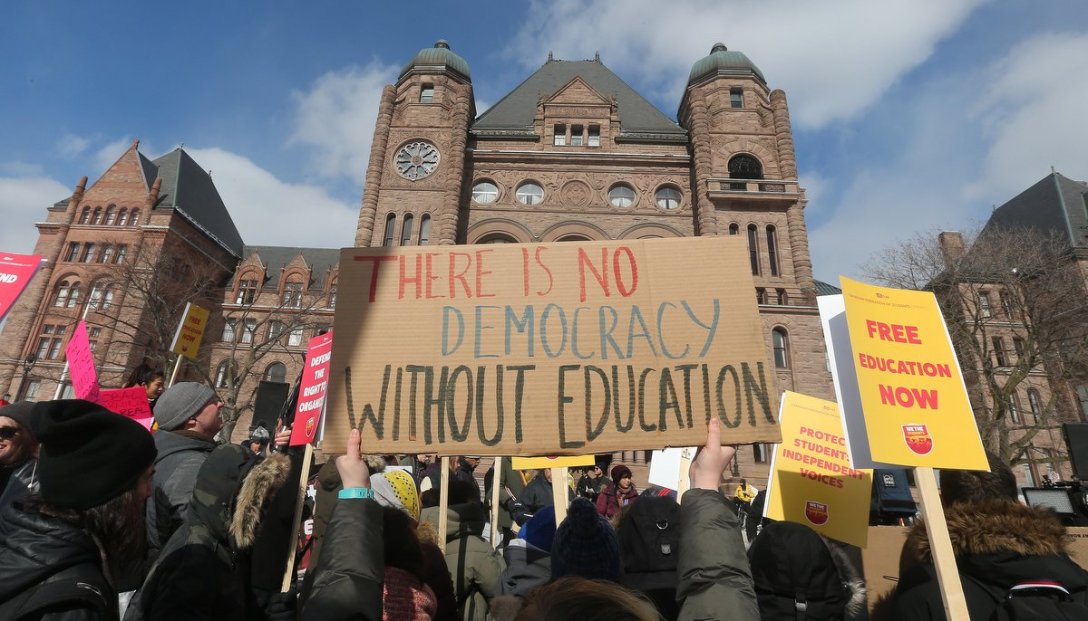
Hundreds of students gathered at Queen’s Park earlier this month to protest the Ford government’s overhaul of OSAP. The chants—”No cuts, no fees, no corporate universities”—echoed across the legislature lawn as students from Toronto, Waterloo, Ottawa, Oshawa, and St. Catharines joined walkouts and rallies across the province. Here’s what’s changing and why students are pushing back.
What’s Actually Changing
Right now, OSAP can give you up to 85% of your aid as grants—money you don’t have to pay back—and a minimum of 15% as loans. Starting this fall, that flips. Eligible students will get a maximum of 25% as grants and at least 75% as loans. For students at private career colleges, grants drop to zero. It’s all loans.
The shift is part of a new $6.4-billion funding model announced by Colleges and Universities Minister Nolan Quinn in February. That same package also ends Ontario’s years-long tuition freeze, letting colleges and universities raise tuition by up to 2% annually for three years. The province says it’s adding 70,000 new seats in healthcare, skilled trades, and tech—but students say they’re the ones footing the bill.
Why Students Are Angry
“Education should be a pathway out of precarity, not another bill students are expected to absorb,” Cyrielle Ngeleka with the Canadian Federation of Students–Ontario told the crowd at Queen’s Park. Students already juggling rent, food, and part-time jobs say the changes will force them deeper into debt. One U of T student told CBC she’ll have to work more on top of exams and assignments. Another from Toronto Metropolitan University said he’s already skipping meals and could graduate with $50,000–$60,000 in debt.
The government argues the old model wasn’t sustainable—grant costs jumped from $1.7 billion to $2.7 billion in a year—and that Ontario needs to align with other provinces. Quinn has said the program isn’t being cut, just restructured, and that students should make “smart decisions” aligned with labour market needs. Critics call that tone-deaf. Ontario Liberal education critic John Fraser said the government “lit a match” against students and families during an affordability crisis. NDP Leader Marit Stiles, who spoke at the rally, said Ontario funds post-secondary at the lowest rate of any province.
What Happened at the Rally
The March 4 protest started peaceful. Students, teachers, and parents marched with signs and drums. Then things escalated. Toronto police made two arrests: one person for vandalizing a monument with spray paint, another for allegedly spitting on an officer during the arrest. Video showed officers and protesters clashing near the legislature.
Walkouts happened the same week at high schools in Oshawa and Durham Region, and at universities in Waterloo and Ottawa. Over 200 people protested in St. Catharines outside Brock University. The red square—a symbol of the 2012 Quebec student strikes—showed up on jackets and signs across the province.
What Happens Next
Opposition parties plan to bring the issue to a vote when the legislature resumes later this month. The province’s aid estimator tool, which shows how much you might get in grants vs. loans, hasn’t been updated yet—the ministry says it’ll happen sometime this spring. Until then, students are left guessing how much more they’ll owe.
If you’re heading to college or university this fall, keep an eye on OSAP updates. The changes are real, and the protests aren’t over.
Related Posts


