
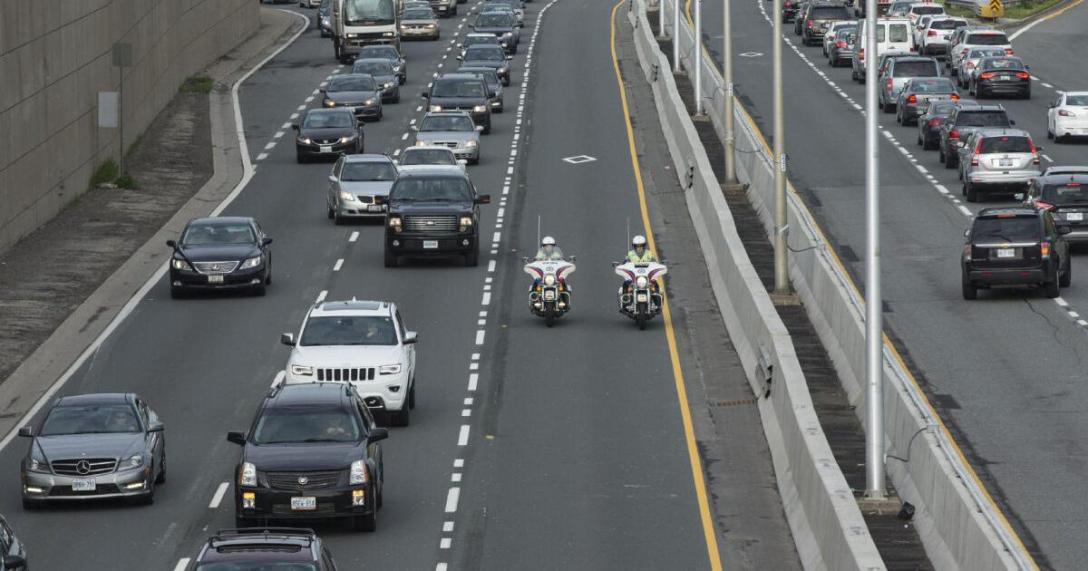
That empty HOV lane taunting you on the 401 at 10 a.m.? Soon you might be able to use it. Ontario’s transportation minister announced last week that solo drivers will be allowed in high-occupancy vehicle lanes during off-peak hours. The catch: nobody’s defined “off-peak” yet. Here’s what we know and when it might actually happen.
What’s Changing
Right now, HOV lanes are reserved for vehicles with two or more people – plus buses, taxis, motorcycles, emergency vehicles, and green-plate EVs. Single-occupant cars are out, unless you’ve got a HOT lane permit on the QEW or parts of the 403 and 410. The new rules would let anyone use HOV lanes outside the busiest weekday morning and evening commute windows.
“After rush hour, those lanes are sitting empty, and if there’s a traffic jam … people should be able to use the HOV lanes,” Premier Doug Ford told reporters at Queen’s Park. The province says Ministry of Transportation modelling shows travel times would improve for drivers in both HOV and regular lanes during off-peak hours – though it hasn’t released specifics on how much time you’d save.
Ontario has 237 kilometres of HOV lanes, with another 146 kilometres planned. All of them would be subject to the change. Commercial vehicles longer than 6.5 metres would still be barred.
When Does This Start?
The province plans to amend Highway Traffic Act regulations later this year, after public consultation and traffic data analysis to pin down off-peak hours. The government says changes would be in place by the end of 2026. Until then, the usual rules apply: two or more people, or you’re in an exempt vehicle. Get it wrong and you’re looking at a $110 fine and three demerit points.
The Context
Single-occupant vehicles made up 72% of traffic on provincial highways as of 2022. Gridlock, the government says, is costing the economy billions and robbing drivers of time. This is the latest in a string of Ford government congestion moves – including a $9-million study on tunneling under the 401 and ongoing fights over downtown bike lanes. Toronto’s also gearing up for the 2026 FIFA World Cup, which could add 15% more cars downtown. Whether opening HOV lanes after rush hour actually eases that remains to be seen.
NDP Leader Marit Stiles said the idea has some merit, but she’s skeptical about the timing. “I would like to see the evidence and the research to prove that this is going to be helpful to anyone,” she said, adding that the flurry of announcements feels like a distraction from the government’s plan to exempt cabinet and premier records from freedom-of-information laws.
What to Expect
If you’re a solo driver on the 401, Gardiner, or other HOV stretches, keep an eye on MTO updates. Once off-peak hours are set and the regs are in place, you’ll be able to use those lanes when they’re not busy. Until then, carpool or stick to the regular lanes – and maybe leave early. Rush hour isn’t getting any shorter.
Related Posts


